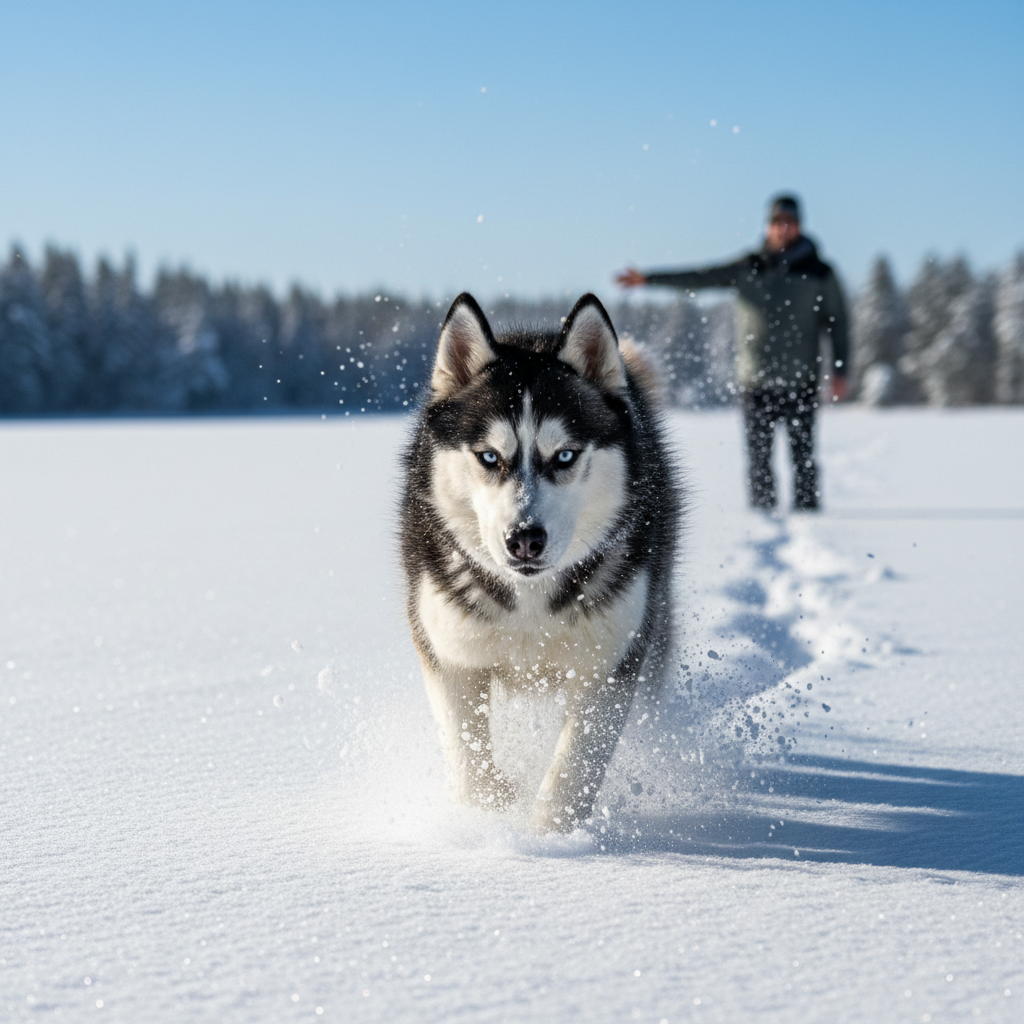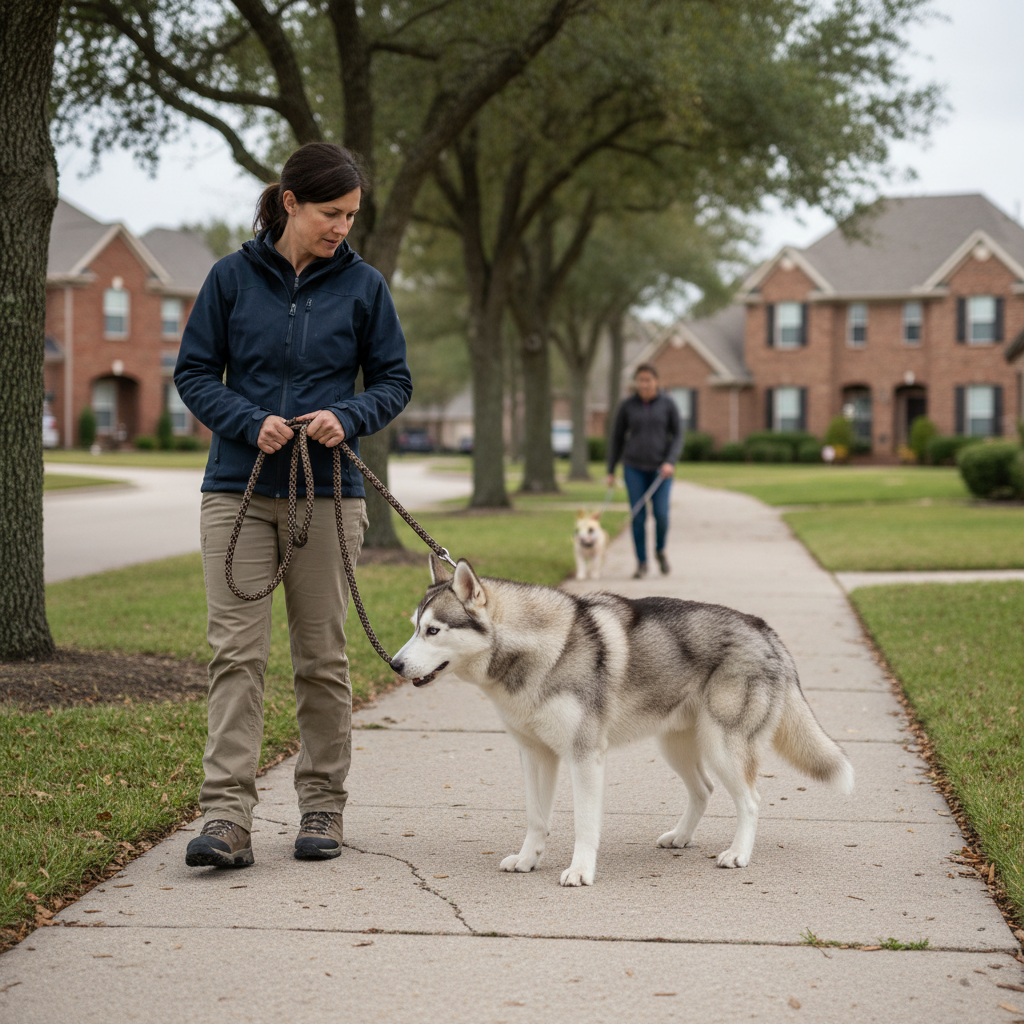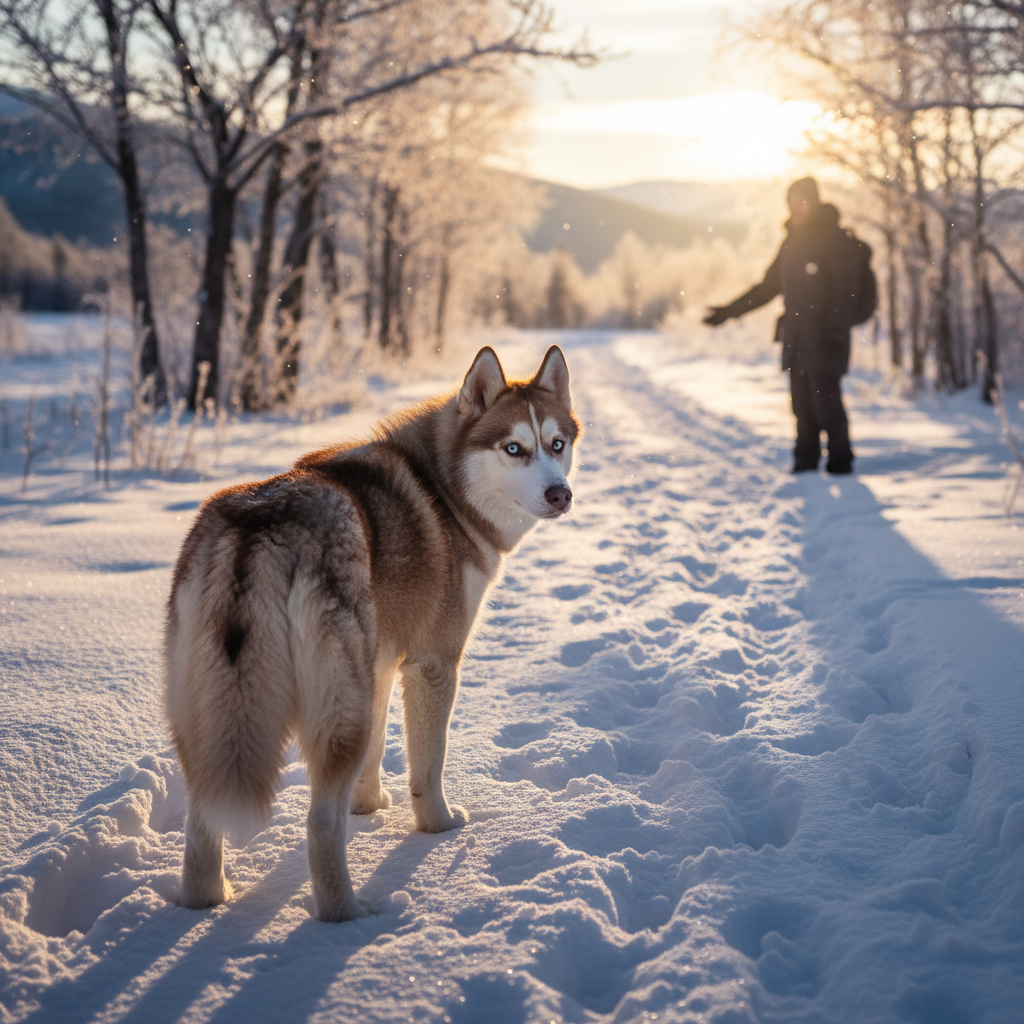


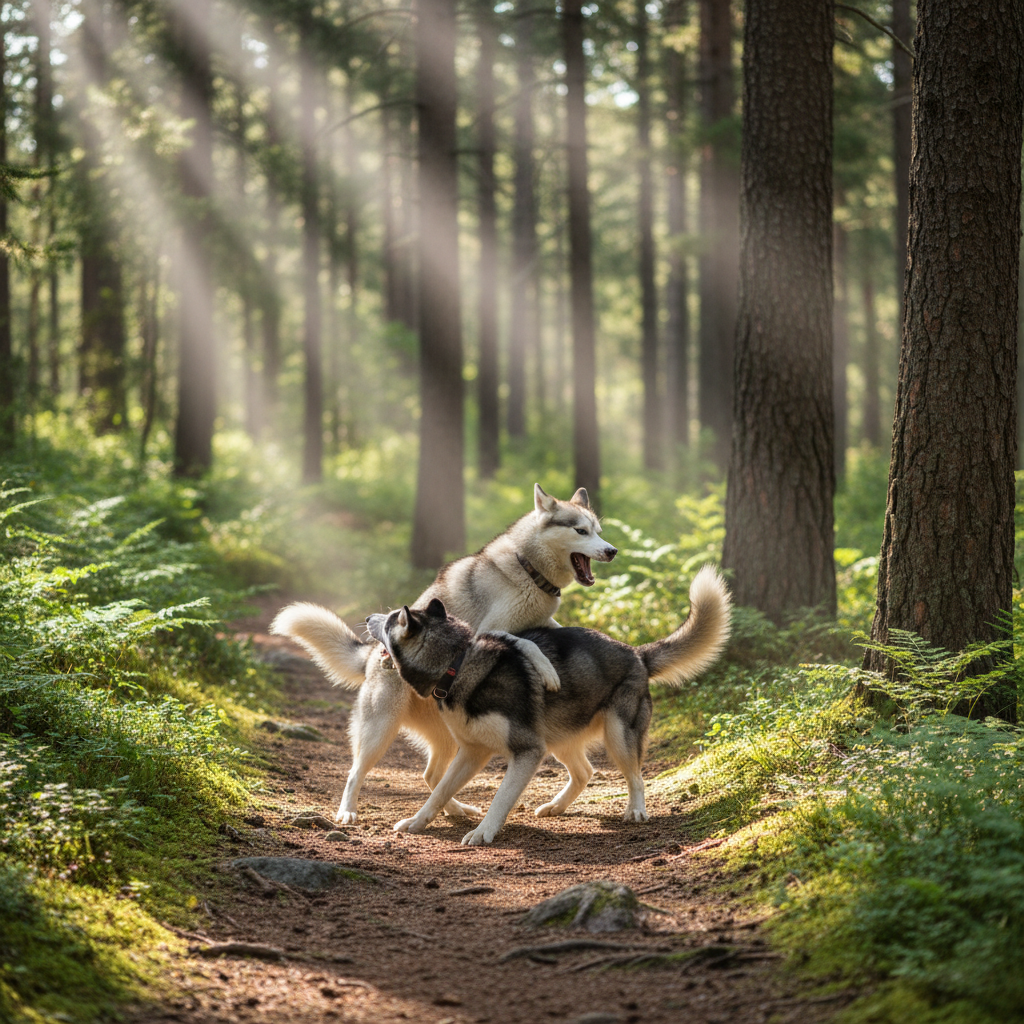

This guide was built from
real failure.
Not a theory. Not a certification. Three years of one specific dog teaching me what no textbook covered.
The dog who wouldn't come.
Her name was Kira. Fourteen months old, pulled from a rescue in Montana. The first time I called her in an open field, she looked directly at me, held eye contact for three full seconds — and sprinted the other direction. I didn't know yet that was communication, not defiance.
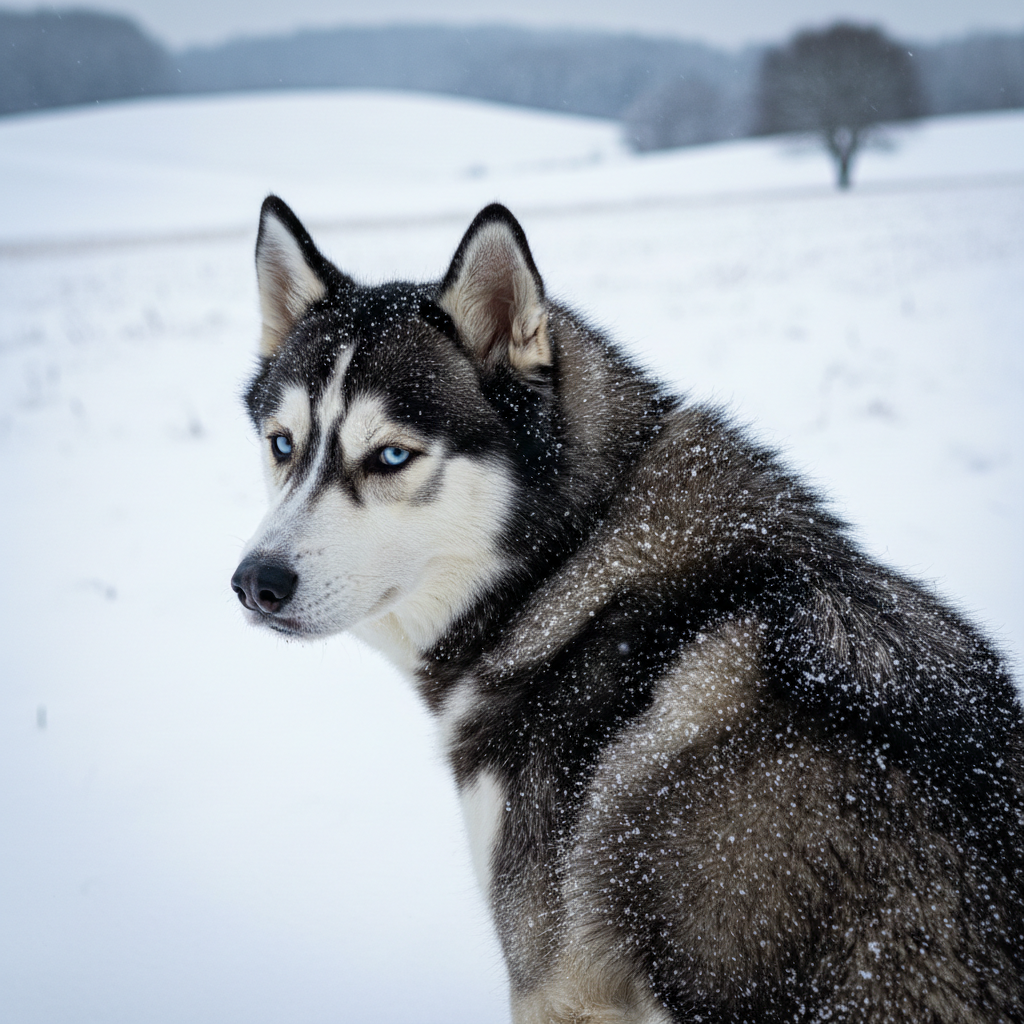
Six trainers. Six different answers.
"Be the pack leader." "Never use a prong collar." "Always use a prong collar." "Ignore the pulling." "Correct every pull." I spent $1,400 on conflicting advice that turned my dog into an anxious mess and me into someone who dreaded walks. Huskies aren't Lab-shaped dogs. They need a different language.
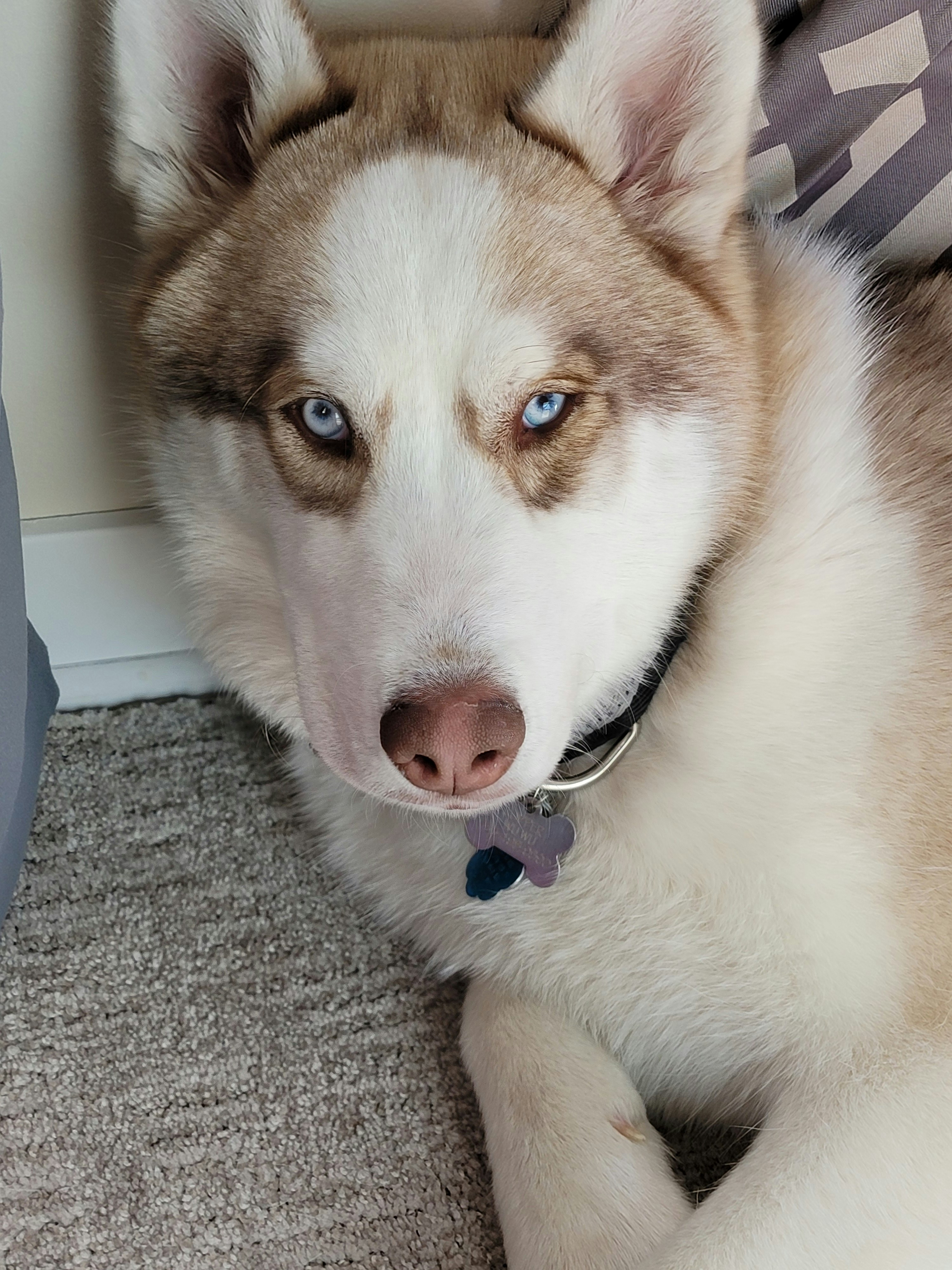
The winter everything changed.
February, a trail outside Flagstaff. I stopped trying to control her and started trying to understand her. I learned to read the ear position before the bolt. I understood why she scanned the treeline every forty seconds. I stopped competing with her instincts and started working inside them. She turned back before I called.

“That Tuesday morning when they knocked over the coffee, bolted through the door, and you stood on the porch in your socks watching them disappear — that Tuesday morning is exactly why I wrote this.”
The guide covers 240 pages of what actually works for this specific breed: recall drills designed for animals that evolved to run 100 miles a day, leash reactivity protocols that don't punish prey drive, and boundary work that respects the fact that your Husky is not broken — just arctic.
Get the Guide — $37